Showing posts with label feminist science fiction. Show all posts

Tuesday, July 7, 2009

Summer of the Caricature?

It will take a moment to explain what this has to do with sexuality and science fiction, but I've been struck by the extent to which new work in sf and fantasy media looks like caricature. First there was the strange caricature that is the new 'original' Star Trek film. I've no problem with using an alternative universe to get away from some of the canonical details of the original show. My problem comes when things like characterization become something sufficiently different from the original as to look like ... yes, a caricature. It's not even smart enough to be satire, which might have been more interesting.

Take the character of James Kirk, for example. On the original show, yes, he was a womanizer. The dead girlfriend of the week was an absolute cliche. But his attitude towards women, while still sexist (we're talking the 60s after all) was considerably less obnoxious and generally down market than this new Kirk. What's with the totally sexist come-ons to Uhura? Of course, that's a rhetorical question. Like Star Trek: Enterprise this new film is being made by people whose ideologies are light years removed from Gene Rodenberry's. Even Enterprise's credits were regressive and sexist. Instead of leading the pack, this film gives us a deeply conservative view of gender and sex. Uhura's completely inexplicable passion for Spock is a good example; even more so, his apparent -- but also entirely unexplained -- return of her affections. Is it so important to heterosexualize these characters that they must be rendered into mere caricatures of themselves?

Here's another example. The tv show Merlin is such an appalling caricature of anything to do with the legend of King Arthur that it's unrecognizable. Why even bother to use these names? We have fifth century characters (who may or may not have had any historical reality) transplanted to something that looks vaguely like the 12th century (judging by the use of stirrups and the type of armour and weapons). But then, even that has to be fudged because, apparently, we would be unable to admire our male heroes if they were not wearing pants. Merlin looks like he's wearing jeans under his tunic, as does Arthur. I guess real men don't wear skirts.

Sad, sad, sad. The Merlin thing could have been quite a fun show if they'd simply set it in a fantasy universe and not stolen names associated with a long tradition of myth and legend. And the Star Trek could have been great if the characters had been treated with respect and not played for cheap (and heterosexist) laughs.

Sigh.

Wendy Gay Pearson

Monday, June 15, 2009

Recommendations?

Ok, I've worn out all the familiar choices. I need new reading recommendations. Any suggestions for good queer, lgbt, trans, genderfuck and so on sf books? Or almost sf books? I'm not averse to slipstream, magic realism or even full on fantasy, so long as it's well written.


Wendy Gay Pearson

Sunday, April 12, 2009

We've been Amazon Ranked ... and then some!

With all the buzz about Amazon sales rankings being removed from lesbian and gay books in the name of avoiding "adult" content, I thought I had better check out QU. Typed in "queer universes" in the search box and got 5 pages of results with the word "universe" in their title -- but none with the word "queer." No QU. Disturbing. Typed in my own name, wondering whether I would have personally been Amazon Ranked because of my middle name (what would that do to Gay Talese, I wonder?). Got some of my essays (nice that Amazon.com can make a profit out of selling my work, but doesn't have to pay me royalties), but, again, no QU. Typed in Veronica's name. Ditto. No QU anywhere.

Then I tried a few keywords, like "sexuality and science fiction." Still no QU. Finally I went to Amazon.ca, where -- at least for the moment -- a title search on Queer Universes still actually produces a result. I then copied the ISBN into Amazon.com. Bingo! There's our book. From that page all the links worked -- I could get to my own name, to Veronia's and Joan's, and back to the book. Closed the browser, re-opened it and tried the search under "queer universes" again. Disturbingly, no book.

So clearly this is not just about ranking. It's about making actual books disappear. As an academic book -- a category that many folks consider dry by definition -- I don't really think it could be condemned for "adult" content. What gives the lie to this, in any case, is that Amazon has left up the links and rankings for dildoes, vibrators, anal plugs, as well as for straight sex manuals, such as The Idiot's Guide to Amazing Sex.

I think a strongly worded email is on its way, not to mention a head's up to both Liverpool University Press and to the University of Chicago Press, which is QU's distributor in the US.

By the way, the ranking on Amazon.ca has disappeared, but at least the book still exists. All things considered, I'm with Nicola on this. It's despicable beyond belief.

Thursday, March 12, 2009

What I am up to...

In her last post, Wendy asked : “What about the rest of you?”

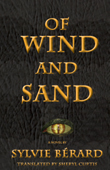
Well, the rest of me is waiting for the release of Of Wind and Sand, the (forever delayed) English version of my novel Terre des Autres. It was supposed to be released in the fall, then winter, and now Edge’s website says April. Let’s keep our fingers crossed. Meanwhile, if you check the Edge link below, you’ll be able to read the first chapter (really, the prologue) of the novel.

The
best part of me is on sabbatical this year, which means that I’m writing. Fiction, theory, and a textbook. And reading. And pondering. And working late at night!

In the last months of 2008, I prepared a French version of the research on which I had based my paper published in
Queer Universes. It’s not really a translation, more of an updated version of a work in progress. The French title is “Sexualité, échange de pouvoir et science-fiction: Une étude SMiotique de quelques textes de science-fiction québécoise” “Sexuality, power exchange and science fiction: An SMiotic study of a few pieces of québec science fiction”] and the article has been published in Voix plurielles.

I have also been writing fiction, and my novel
Sagapolis (working title) has been sent to the publisher a few weeks ago. They have just told me they were finished reading it (yep, they are quick!), but they have not commented it yet. Wish me good luck!

Right now, my main concern is the paper that I will be presenting this summer at the Colloque de Cerisy (France) on science fiction. The theme of the conference is
Comment rêver la science-fiction à présent? [How to dream science fiction today?], and my paper (of course, I should say), will be on Élisabeth Vonarburg’s fiction.

And that’s all for now, folks.


Terre des Autres on Alire’s website: http://alire.com/Romans/TerredesAutres.html

Of Wind and Sand on Edge’s website: http://www.edgewebsite.com/books/ofwindandsand/ws-catalog.html

“Sexualité, échange de pouvoir et science-fiction : Une étude SMiotique de quelques textes de science-fiction québécoise” in Voix plurielles : http://www.brocku.ca/cfra/voixplurielles05-02/index.html

The Cerisy conference Comment rêver la science-fiction à présent?: http://www.ccic-cerisy.asso.fr/sciencefiction09.html

Tuesday, March 3, 2009

Welcome!

Welcome to the blog for Queer Universes: Sexualities in Science Fiction. The first anthology of this century to deal with questions of sexuality in science fiction, Queer Universes was published in May, 2008, by Liverpool University Press.

While there has been plenty of discussion about issues of gender in science fiction, as well as about feminist sf, the idea of thinking about how sf reflects both historical and contemporary attitudes towards sexuality is a relatively new phenomenon. Queer Universes provides a spectrum of viewpoints on the topic of sexuality and science fiction.

Science fiction cannot help reflecting on questions of sexuality. It's so deeply embedded in our lives -- even if we can imagine cultures where sexuality, reproduction, gender, family and so on operate quite differently -- that even the most chaste of sf has to make certain assumptions about how sexuality works. The base assumption, often, is that sexuality will be exactly the same in the future as it was at the time the writer invented her or his characters and set them loose in the universe. But that's only one potential scenario, and many other writers, from Robert A. Heinlein, with his line marriages and other alternative family arrangements, to Joanna Russ, with her woman-only planet of Whileaway, have found plenty of possibilities to explore in their work. Sometimes that work is about those contemporary and important questions around sexuality, gender, race and so on; sometimes sexuality is simply background information -- but even there it can be an important part of an sf story's "cognitive estrangement," to quote Darko Suvin.

Contents


Part One: Queering the Scene


1. Introduction: Queer Universes
Wendy Gay Pearson, Veronica Hollinger, and Joan Gordon

2. Alien Cryptographies: The View from Queer
Wendy Gay Pearson

3. War Machine, Time Machine
Nicola Griffith and Kelley Eskridge

Part Two: Un/Doing History


4. Sextrapolation in New Wave Science Fiction
Rob Latham

5. Towards a Queer Genealogy of SF
Wendy Gay Pearson

6. Sexuality and the Statistical Imaginary in Samuel R. Delany’s Trouble on Triton
Guy Davidson

7. Stray Penetration and Heteronormative Systems Crash: Queering Gibson
Graham J. Murphy

Part Three: Disordering Desires


8. ‘Something Like a Fiction’: Speculative Intersections of Sexuality and Technology
Veronica Hollinger

9. ‘And How Many Souls Do You Have?’: Technologies of Perverse Desire and
Queer Sex in Science Fiction Erotica
Patricia Melzer

10. BDSMSF(QF): Sadomasochistic Readings of Québécois Women’s Science
Fiction
Sylvie Bérard

Part Four: Embodying New Worlds

11. ‘Happy That It’s Here’: An Interview with Nalo Hopkinson
Nancy Johnston

12. Queer Nature: Close Encounters with the Alien in Eco/feminist Science Fiction
Helen Merrick

13. Queering the Coming Race?: A Utopian Historical Imperative
DeWitt Douglas Kilgore